Every fall, I bring home a few butternut squash from local farmers to keep for the colder months. I love cutting one open on a chilly afternoon, setting the halves cut-side down on a baking sheet and gently roasting them in the oven. By the time the squash is tender enough to scoop out with a spoon, most of the work is done.
I blend the roasted squash with softened onions, vegetable stock, and half a Honeycrisp apple. A little maple syrup brings out the sweetness of the squash, and a few gratings of nutmeg give it warmth. I taste as I go. Some squash are so sweet after roasting that they need very little maple.
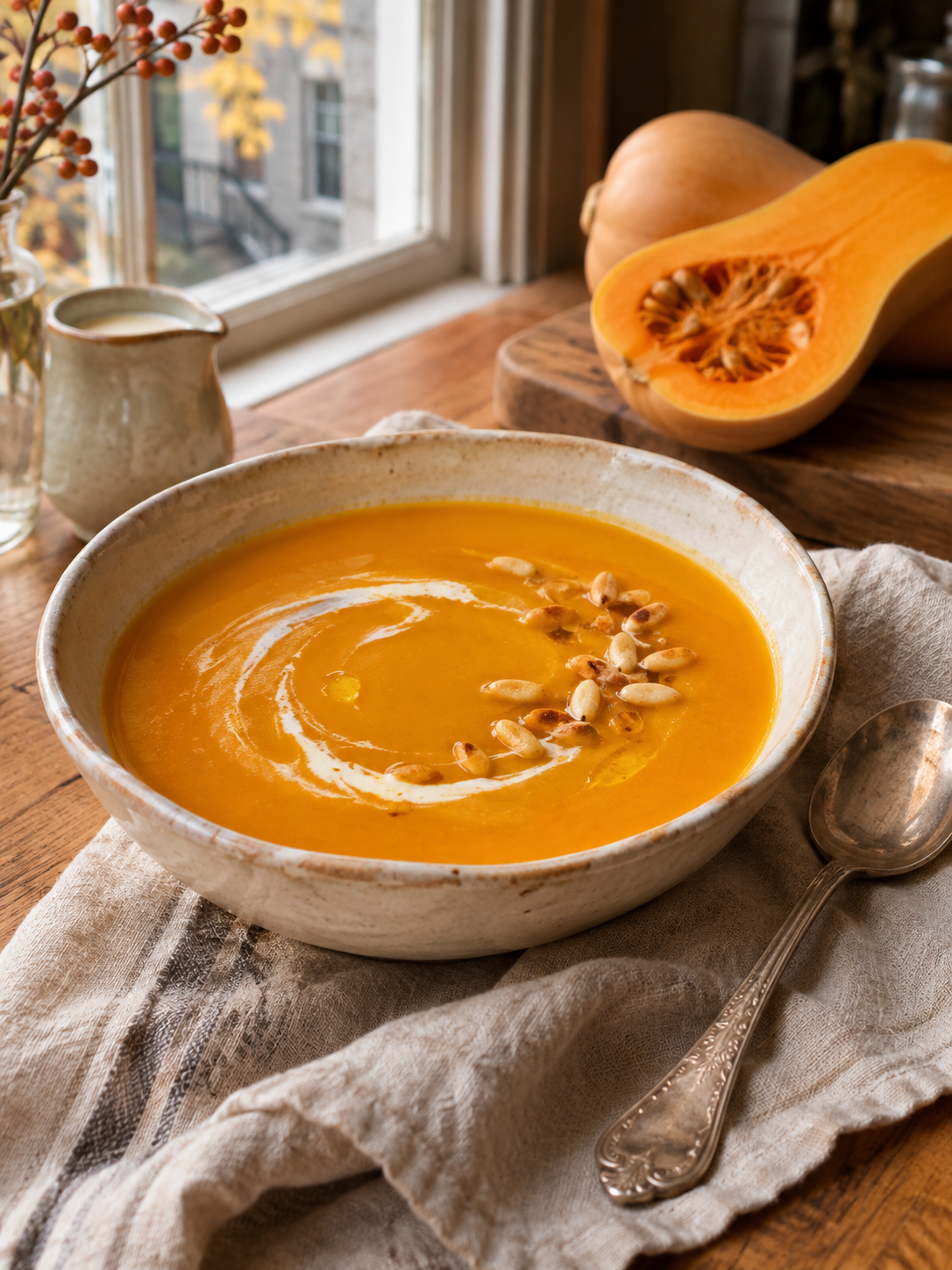
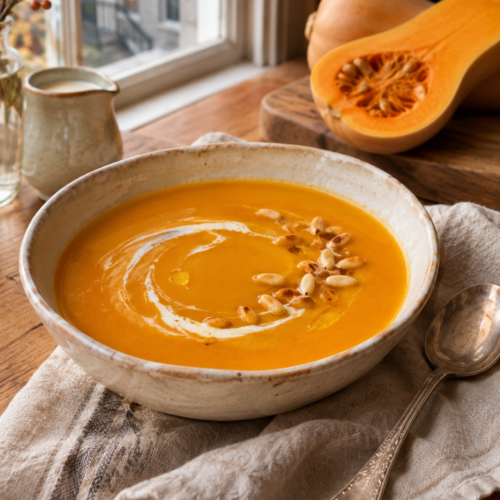
My favourite part is the topping. Just before serving, I toast a handful of pine nuts in salted butter. The pine nuts turn golden and a spoonful gives the silky soup the best crunch. For an autumn dinner with family and friends, I serve it in small bowls as a first course, with a few drops of cream swirled through each one.
Tips for the Perfect Soup
Roasted Butternut Squash Soup with Maple & Toasted Pine Nuts
Ingredients
- 2 medium butternut squash (about 6 cups roasted) halved lengthwise and seeded
- 1 medium onion diced
- 1 teaspoon sea salt to taste
- 2 tbsp extra-virgin olive oil
- 1/2 apple (honeycrisp) peeled, cored and diced
- 2 cloves garlic confit from above
- 4 cups vegetable stock divided, plus more as needed
- 1/4 cup maple syrup or to taste
- freshly grated nutmeg to taste
- Up to ¼ cup 35% cream for serving, optional
For the toasted pine nuts
- 2 tablespoons salted butter
- 1/4 cup pine nuts
For the garlic confit (optional)
- 6 garlic cloves
- About 1/4 cup extra-virgin olive oil enough to cover the cloves in a small ovenproof ramekin
Instructions
- Preheat the oven to 375°F (190°C).
- Prepare the squash. Cut squash in half lengthwise. Using a spoon, scoop out and discard the seeds and stringy flesh. Place the squash halves cut-side down on a parchment-lined baking sheet.
- Prepare the garlic confit (optional). Put the peeled garlic in a small ovenproof ramekin, pour in enough olive oil to cover the cloves. Add herbs as desired, such as thyme or rosemary. Place it on the same baking sheet as the squash.
- Roast until tender. Roast the squash for 60–70 minutes, or until a fork slips easily through the thickest part of the neck. Check the garlic after 30 minutes and remove the ramekin as soon as the cloves are soft enough to mash.
- Scoop out the flesh. Remove the squash oven and using a spatula, flip the squash halves over and allow to cool for a few minutes. Using a spoon, scoop all the roasted squash flesh out into a blender or large bowl, being careful not to take any of the skin. Discard squash skins.
- Soften the onion. Warm the olive oil in a large soup pot over medium-low heat. Add the onion and ½ teaspoon salt. Cook gently, stirring occasionally, until the onion is soft and translucent.
- Add the squash to the pot. Add the measured squash, apple, garlic confit if using, and 3 cups of vegetable stock. Stir well and bring to a gentle simmer. Cook uncovered for 20–30 minutes, stirring occasionally, until the apple is tender and warm. Add a splash of the reserved stock if the soup gets too thick to stir easily.
- Simmer for 20-30 minutes. Bring to a gentle simmer and cook until the apple is tender, about 20-30 minutes to let the flavours come together. Add the remaining stock gradually until the soup pours easily from a ladle.
- Blend until silky. Working in small batches in a countertop blender suitable for hot liquids, vent the lid and blend until smooth. Add a little reserved stock as needed to help each batch circulate. Return the puréed soup to the pot. Alternatively, use immersion blender directly in the pot but the soup will not be as smooth.
- Finish with maple and nutmeg. Warm the soup gently. Stir in 2 tablespoons of maple syrup and a few gratings of nutmeg. Taste, then add more syrup a spoonful at a time until the maple just comes through. Adjust the salt and pepper and add enough of the remaining stock for the soup to pour easily from a ladle.
- Toast the pine nuts. Melt the butter in a small skillet over medium-low heat. Add the pine nuts and stir often. As soon as they turn golden and smell nutty, transfer them and the butter to a small bowl.
- Serve warm. Ladle the soup into warm bowls. If using cream, dot a little over the surface and draw the tip of a skewer through the drops. Spoon the toasted pine nuts and a little of the warm butter over each serving.
Notes
- Make ahead. I like to make the soup a day ahead when I’m having people over. Refrigerate it promptly in shallow containers, then reheat gently on the stovetop. Once it’s warm, add a splash of vegetable stock if it’s thicker than you like.
- To freeze. Freeze the soup without the pine nut topping in airtight containers for up to 3 months. Thaw overnight in the refrigerator and reheat on the stovetop. Toast the pine nuts just before serving.
- To serve. I usually finish each bowl with just the butter-toasted pine nuts. For the swirl pictured, add a few drops of 35% cream and draw the tip of a skewer through them. For a plant-based version, skip the cream and toast the pine nuts in olive oil.
-
Plant-based option. Toast the pine nuts in extra-virgin olive oil and skip the optional cream. Finish each bowl with the golden pine nuts and a drizzle of their fragrant oil.
- Extra garlic confit? Refrigerate the remaining cloves and their oil promptly and use within 1 week. A softened clove spread over warm toast is lovely alongside the soup.